Nationwide collection
Published transport options range from 7.5mt rigid vehicles to 44mt articulated trailers, with Moffett facilities if required.
 Get in touch ↗
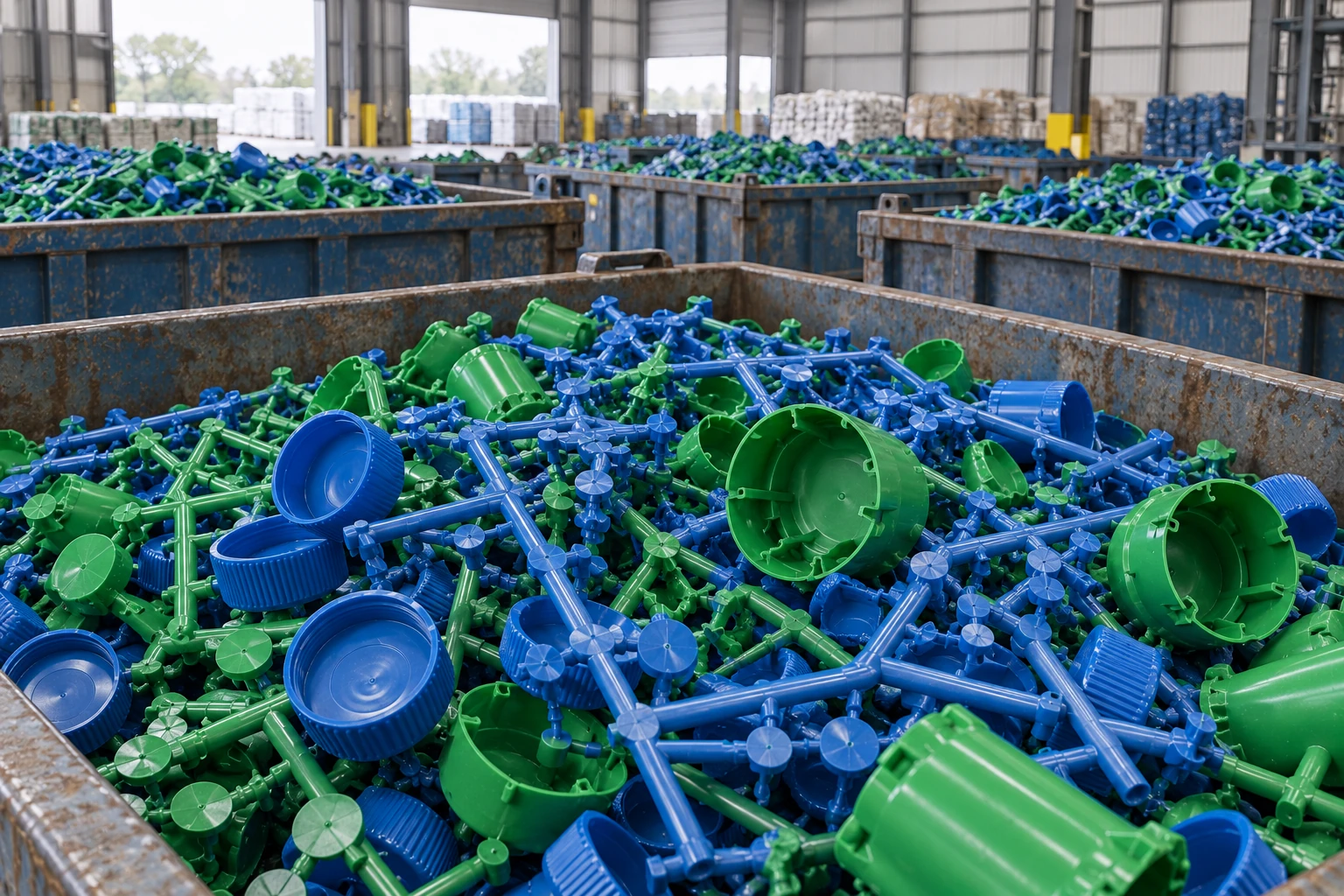
An off-spec part can still contain valuable polymer. Keeping rejects, over runs, colour changes and redundant stock separate creates a better starting point for recovery.
A typical industry pathway for suitable material. The actual route depends on composition, condition and the agreed receiving process.
Record the resin grade, colour, additives and reason for rejection. A known production history helps establish a suitable route.
Store different polymers and filled grades apart. Send photographs and approximate weights to Poly-Cycle before arranging transport.
In a typical recovery route, bulky rejects or purges are shredded and granulated into manageable particles.
Checks, separation and any necessary cleaning protect the quality of the recovered polymer. Requirements depend on the batch.
Suitable thermoplastic regrind can be melt processed into pellets or prepared as feedstock for an agreed manufacturing application.
An injection moulder can use an approved recycled grade, sometimes blended with virgin resin, in a new component.
Poly-Cycle specifically lists moulding scrap among its materials. Its published polymer-processing service converts suitable polymers into pellets for blending with virgin stock in injection moulding.
Discuss moulding scrap with the team ↗Published transport options range from 7.5mt rigid vehicles to 44mt articulated trailers, with Moffett facilities if required.
Poly-Cycle offers monthly or annual waste reports with grades, weights and EWC codes, plus a Waste Transfer Note for each collection.
Its published service offers rebates and instant payment on ex-works terms. Confirm the terms for your particular batch.
A rejected shape does not automatically mean the polymer itself is unusable.
Keeping known production batches separate avoids unnecessary mixing.
Recovered feedstock can replace part of a manufacturer’s virgin-material demand where it meets the specification.
The opportunity is to retain material value and reduce avoidable disposal. The benefits of each load depend on its condition, transport, processing and the virgin material its next use can replace.
Share clear information before arranging a collection. It helps Poly-Cycle discuss suitability, handling and a practical route.
Ask about moulding scrap ↗No. Resin type, degradation, additives and contamination affect the options. Ask Poly-Cycle to assess the batch before treating it as accepted material.
Company services are based on Poly-Cycle’s published website. External sources explain wider industry routes and examples; their equipment, customer projects and approvals are not attributed to Poly-Cycle.
Talk to us about your materials, collections and recycling requirements.